Crispy Baked Chicken Parmesan Recipe (Stays Crunchy Under the Sauce)
Introduction
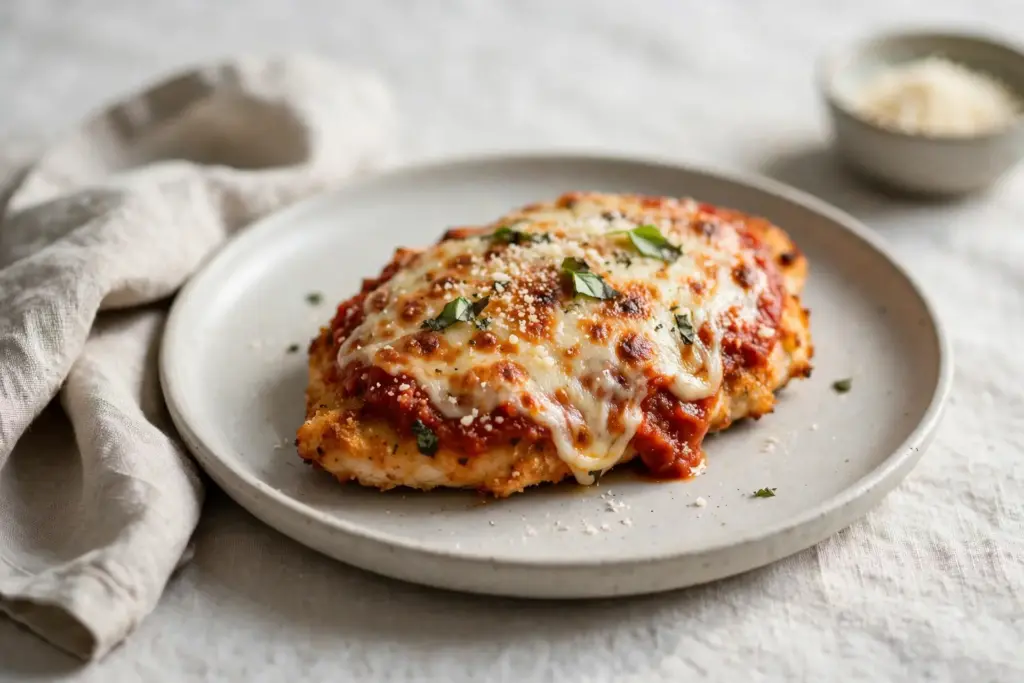
The breading falling off is the actual problem with most chicken parmesan recipes, not the sauce and not the cheese. I spent three dinners in a row watching the crust slide clean off the chicken the second it hit the marinara, and the fix turned out to be almost embarrassingly simple: sear the cutlets hard enough to set the crust before the oven ever gets involved, then add the sauce and cheese on top instead of drowning the chicken in it. This chicken parmesan recipe uses that two-stage method, a hot skillet first, then a short blast in the oven, so the crust holds its crunch even with mozzarella melted over it.
You get a golden, panko-crusted cutlet with a sauce that tastes like it simmered all afternoon, in about 35 minutes total. No breading falls off. No soggy bottom. Just a version that behaves the same way every time I make it, which by now is easily once a month.
Why You’ll Love This Recipe
- The crust survives the sauce. Searing the panko crust in oil before saucing means it stays audibly crunchy, not soft, even after five minutes under melted cheese.
- One pan, minimal cleanup. If you use an oven-safe skillet, the chicken goes from stovetop to oven to table without a second dish.
- 35 minutes, start to finish. Faster than most delivery orders, and the chicken comes out juicier than what you’d get at most Italian restaurants around a strip mall.
- Reheats without turning to mush. A 350°F oven brings leftovers back to nearly fresh-cooked texture, something a microwave cannot do for breaded chicken.
- Kid-approved without extra effort. The mild marinara and melted mozzarella need no adjustment for picky eaters, and the spice can be added separately for the adults at the table.
- Freezer-friendly for later. Bread the cutlets, freeze them raw, and you’ve got a head start on dinner three weeks from now.
Quick Information
- Prep time: 15 minutes
- Cook time: 20 minutes
- Total time: 35 minutes
- Servings: 4
- Difficulty: Easy
- Calories: 420 per serving
- Key tool: an oven-safe skillet, so you sear and bake in the same pan
- Best for: a Tuesday dinner that also holds up fine for guests on a Saturday
Nutrition Information
- Calories: 420
- Protein: 38g
- Carbohydrates: 22g
- Fat: 20g
- Fiber: 3g
- Sugar: 6g
- Sodium: 690mg
- Serving size: 1 cutlet with ¼ cup sauce and 2 tablespoons cheese
- Servings per recipe: 4
The protein count runs high here because a full chicken breast, not a thin cutlet stretched with filler, sits at the center of each serving. Most of the sodium comes from the parmesan and marinara, so a low-sodium jarred sauce will bring that number down noticeably if it matters to you.
Nutrition disclaimer: these figures come from a standard nutrition calculator using the exact brands and amounts listed below. Swapping breadcrumb brands or using a different jarred sauce will shift the numbers, so treat this as a close estimate rather than a lab result.
Ingredients
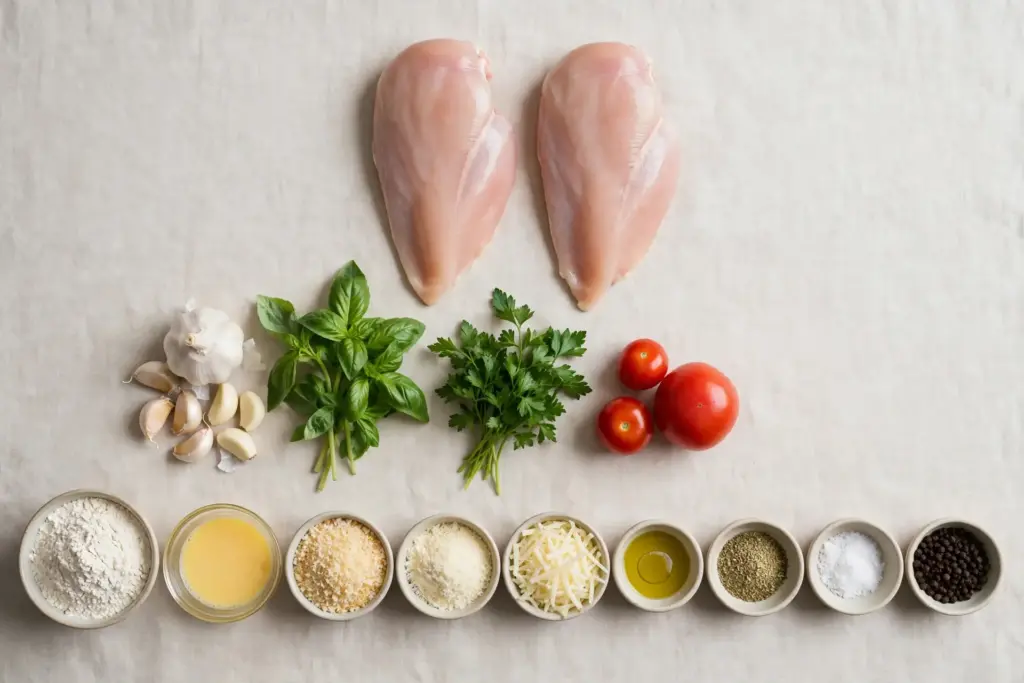
For the chicken:
- 4 boneless, skinless chicken breasts (6 to 7 oz each), pounded to ½ inch thick
- Salt and black pepper, to season
- ¾ cup all-purpose flour
- 2 large eggs
- 1 tablespoon water
- 1½ cups panko breadcrumbs
- ¾ cup finely grated parmesan, divided (½ cup goes into the crust, ¼ cup tops the finished dish)
- 1 teaspoon garlic powder
- 1 teaspoon dried oregano
- 3 tablespoons olive oil, for searing
For the topping:
- 1½ cups marinara sauce, ideally made with San Marzano tomatoes
- 1½ cups shredded low-moisture mozzarella, grated by hand from a block
- 2 tablespoons fresh basil, torn, for serving
Kitchen note: Pre-shredded mozzarella is coated in a starch that keeps it from clumping in the bag, and that same coating keeps it from melting smoothly. A block of mozzarella you grate yourself melts into that stretchy, glossy layer you’re picturing. It takes ninety extra seconds.
Substitutions: Panko can be swapped for regular breadcrumbs, though the crust will be denser and less shattery. Chicken thighs, pounded to the same ½ inch, work in place of breasts if you prefer darker meat. Any pork-based ingredient has been left out entirely; where recipes sometimes call for a splash of wine in the sauce, this one uses chicken broth for the same acidity and body without the alcohol.
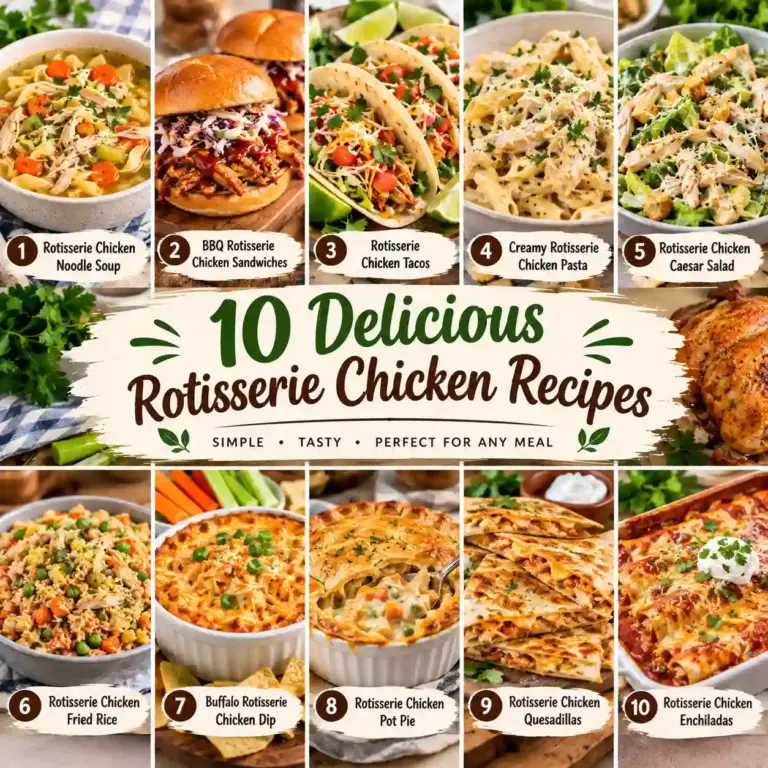
Read Also: fried rice recipe
Equipment Needed
- Meat mallet (or a heavy skillet, in a pinch) to bring the chicken to an even ½ inch so it cooks at the same rate all the way through.
- 12-inch oven-safe skillet, so you can sear on the stovetop and finish in the oven without switching dishes.
- Instant-read thermometer. This is the only doneness check that matters for chicken; everything else is a guess.
- Wire rack set over a baking sheet, useful if you’re breading cutlets ahead of time so the bottom doesn’t turn soggy while it waits.
- Box grater or microplane for the parmesan and mozzarella. Pre-grated cheese is convenient, but it costs you texture in both the crust and the melt.
Preparation
Pat the chicken breasts dry with paper towels before you do anything else. Any surface moisture left on the meat turns to steam under the breading and works the crust loose from underneath, which is the single biggest reason breading slides off in the oven.
Place each breast between two sheets of plastic wrap and pound it to an even ½ inch, working from the center outward. Season both sides with salt and pepper. Set up three shallow dishes in a row: flour in the first, the eggs beaten with the tablespoon of water in the second, and the panko mixed with ½ cup parmesan, the garlic powder, and the oregano in the third. Preheat the oven to 425°F, and if you’re using a separate baking dish rather than an oven-safe skillet, get that greased and ready now.
Step-by-Step Instructions
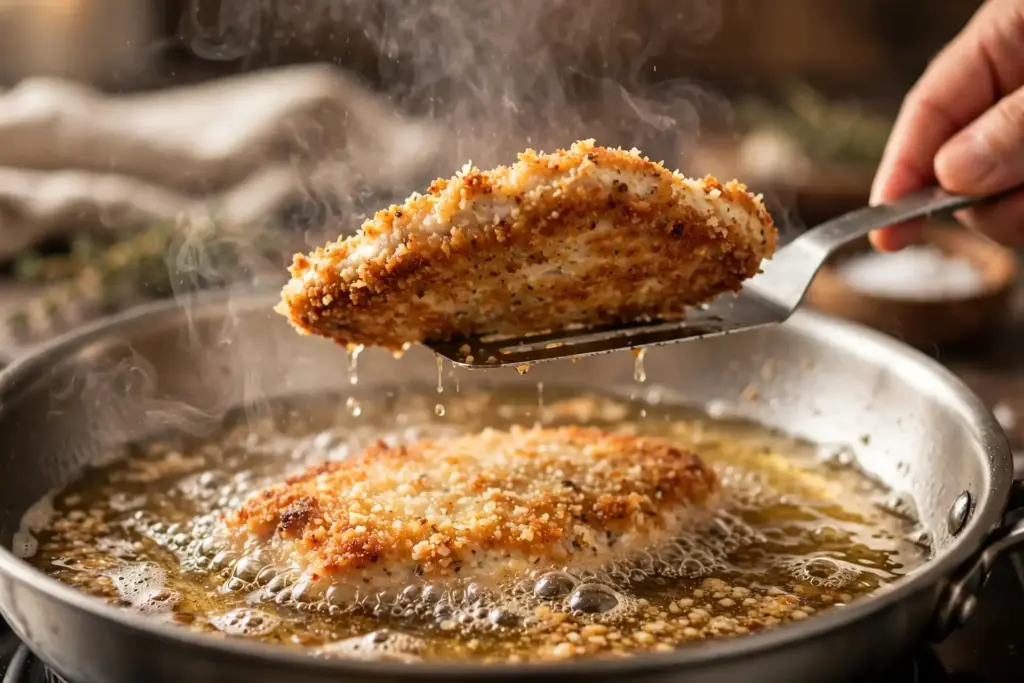
- Dredge each cutlet. Coat it in flour and tap off the excess, dip it into the egg wash, then press it into the panko mixture on both sides so the crumbs actually adhere rather than just resting on top.
- Taste the breadcrumb mix before the first cutlet goes in. If it tastes flat off a spoon, it needs more salt, not more garlic powder. Parmesan brings salt on its own, but brands vary enough that this thirty-second check saves the whole batch.
- Sear over medium-high heat. Add the olive oil to the skillet and once it shimmers, lay in the cutlets without crowding the pan. Three minutes per side gets you a crust the color of strong tea, deep amber with visible texture, not pale and not dark brown.
- Chef’s note: if the oil starts smoking before the three minutes are up, pull the pan off the heat for thirty seconds. Panko browns fast, and a pan that’s too hot will scorch the crumbs while the inside of the chicken is still raw.
- Top each seared cutlet with about ¼ cup of marinara, spread thin rather than pooled, then ⅓ cup of mozzarella and a sprinkle of the reserved parmesan. Keeping the sauce thin here is what keeps the crust from going soft underneath it.
- Chef’s note: resist the urge to bury the chicken in sauce the way a restaurant plate does. A thin layer that just covers the surface gives you the tomato flavor without turning the crust to paste.
- Bake at 425°F for 12 to 15 minutes, until the cheese is fully melted with light browning at the edges and an instant-read thermometer inserted into the thickest part reads 165°F.
- Chef’s note: pull the pan the moment it hits 165°F, not a minute later. Chicken breast keeps cooking for a couple of degrees after it leaves the oven, and overshooting by even five degrees is the difference between juicy and dry.
- Rest for 5 minutes on the pan before serving. That short pause lets the juices redistribute through the meat instead of running out onto the plate the second you cut in.
- Scatter the torn basil over the top and serve.
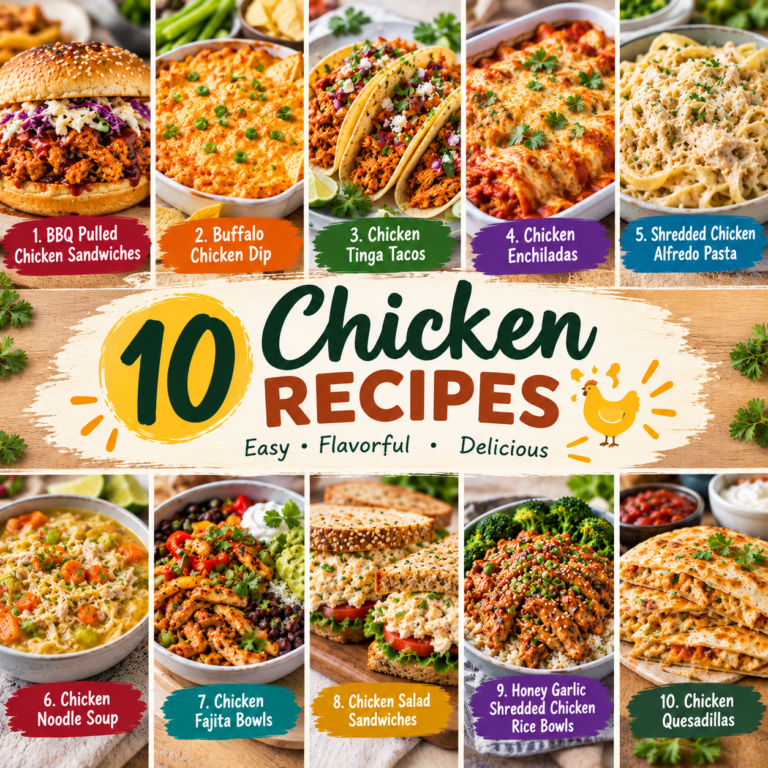
Read Also: shredded chicken recipes
Expert Tips & Tricks
- The mistake I made for years: I used to add the sauce and cheese before the chicken ever hit heat, all in one baking dish. The crust never had a chance to set, and it dissolved into the sauce every single time. Searing first fixed it completely.
- Make-ahead move: bread the cutlets up to a day ahead and store them uncovered on a wire rack in the fridge. The open air actually helps the coating set, so it sears even better the next day.
- For extra crunch, toast the panko in a dry skillet for two minutes before you mix it with the parmesan and seasoning. It pre-browns the crumbs slightly, so the final crust reads even crispier.
- Pat, don’t rinse. Rinsing raw chicken doesn’t remove bacteria, it just splashes it around your sink, and it adds back the moisture you just spent time removing.
- Grate cheese cold, straight from the fridge. Cold mozzarella grates into clean shreds instead of gumming up on the grater, and it melts more evenly for the same reason.
- Time-saver: pound and bread all four cutlets before you turn the burner on. Once the oil is hot, you want to move straight through the searing without stopping to prep the next piece.
Kitchen note: an oven-safe skillet is worth owning if you cook this more than twice a month. It cuts the dish pile by one pan every single time, and it’s the reason this recipe takes 35 minutes instead of 45.
Common Mistakes & Troubleshooting
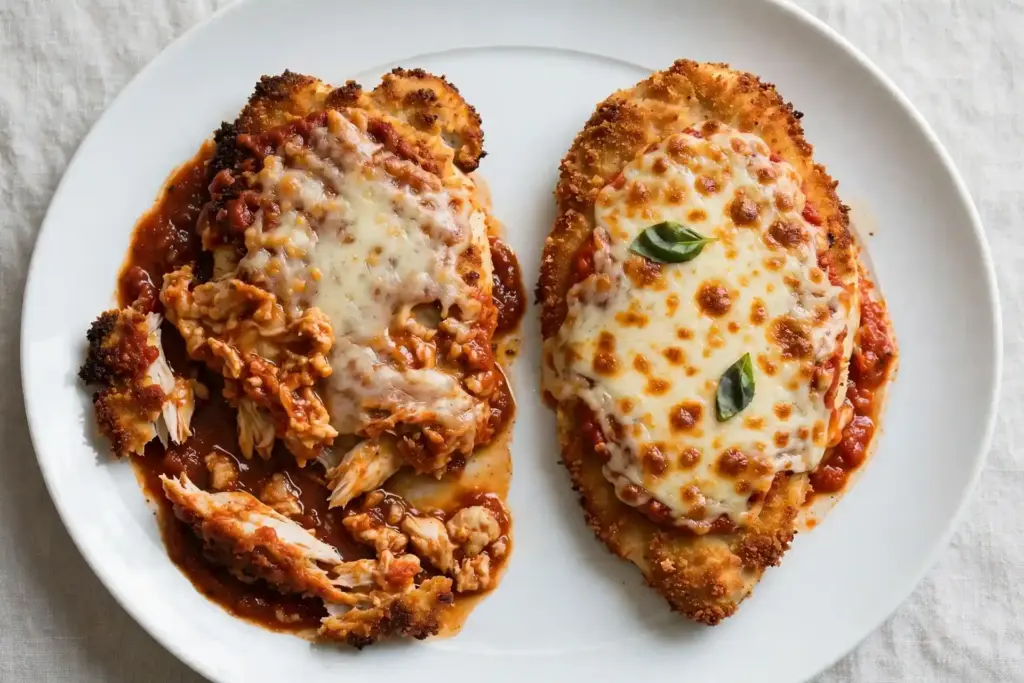
Soggy crust from too much sauce. A thick layer of marinara traps steam against the breading while it bakes, and steam is what turns a crisp crust soft. Spread the sauce thin and serve extra on the side for anyone who wants more.
Breading that slides off in one piece. This almost always traces back to wet chicken meeting flour. Pat the meat completely dry before dredging, and press the panko onto the surface with your fingers rather than just dipping and hoping it sticks.
Chicken that’s dry by the time the cheese melts. This happens when the oven does all the cooking instead of the sear doing most of it. Three minutes per side in the skillet should bring the chicken close to done already, so the oven only needs 12 to 15 minutes to finish the job and melt the cheese.
A pale, greasy crust instead of a golden one. Usually the oil wasn’t hot enough before the chicken went in. Cold oil soaks into the panko instead of frying it, so wait until the oil visibly shimmers and a single breadcrumb dropped in sizzles right away.
Uneven cooking from one thick end and one thin end. Skipping the pounding step means the thin end of the breast overcooks while the thick end is still underdone at the center. Pounding to an even ½ inch across the whole cutlet is what makes the 165°F reading accurate everywhere, not just at one spot.
Storage Instructions
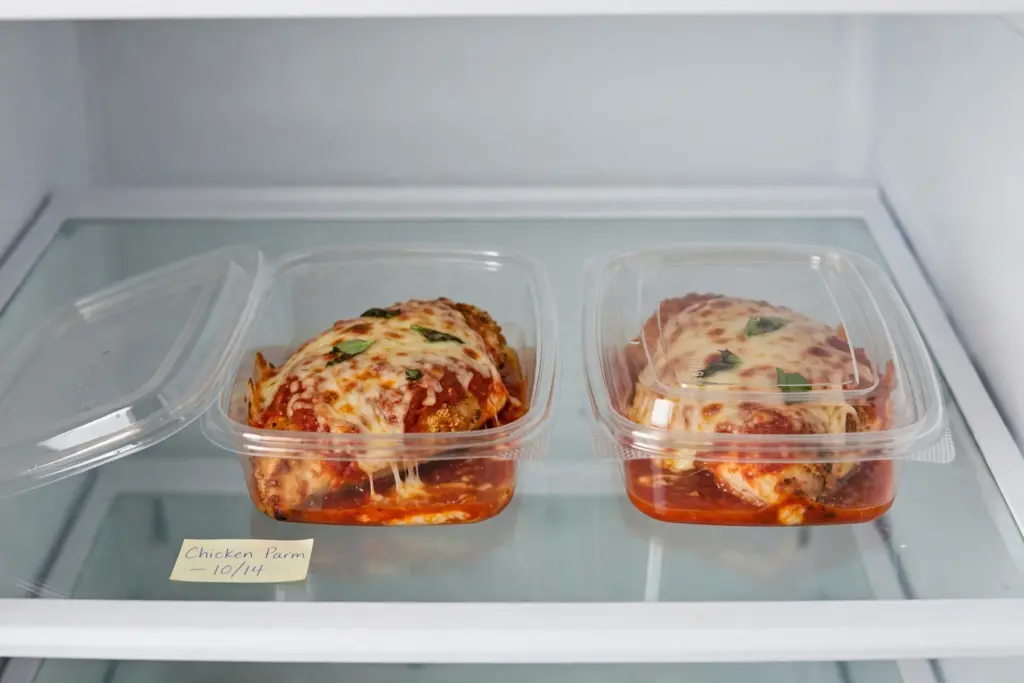
Room temperature: leftovers should not sit out longer than two hours. Past that, move them to the fridge.
Refrigerator: sealed in a container, the cooked cutlets keep their texture well for three to four days. Keep the sauce on top rather than mixed in if you want the crust to survive reheating better.
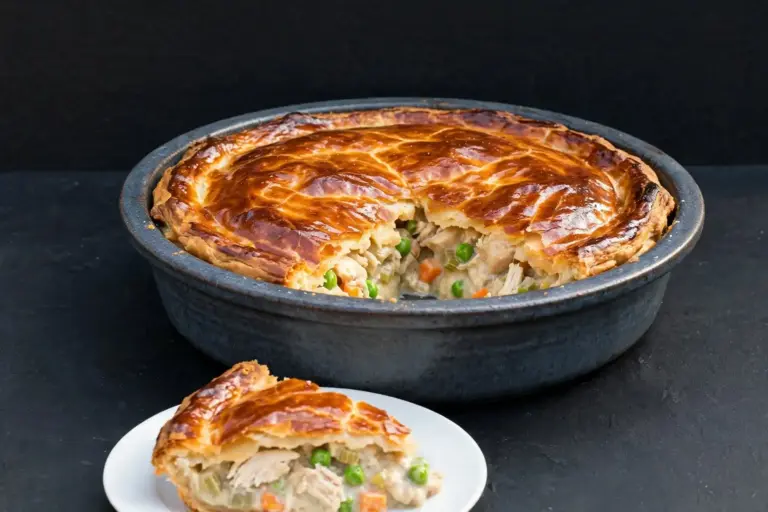
Freezer, uncooked: bread the cutlets but skip the searing and baking. Lay them flat on a tray until solid, then transfer to a freezer bag. They’ll hold for up to three months this way, and you sear them straight from frozen, adding about two extra minutes per side.
Freezer, cooked: fully baked chicken parmesan can also be frozen for up to two months, though the crust softens more on reheating than the uncooked version does.
Reheating: a 350°F oven for 15 to 20 minutes on a wire rack brings the crust back closest to its original crunch. The microwave is faster but leaves the breading rubbery, so I only use it when I’m genuinely out of time.
Kitchen note: freezing the cutlets raw rather than cooked is the better move if you’re planning ahead. You get a fresher sear and a crisper final crust than reheating already-baked chicken ever gives you.
Variations & Substitutions
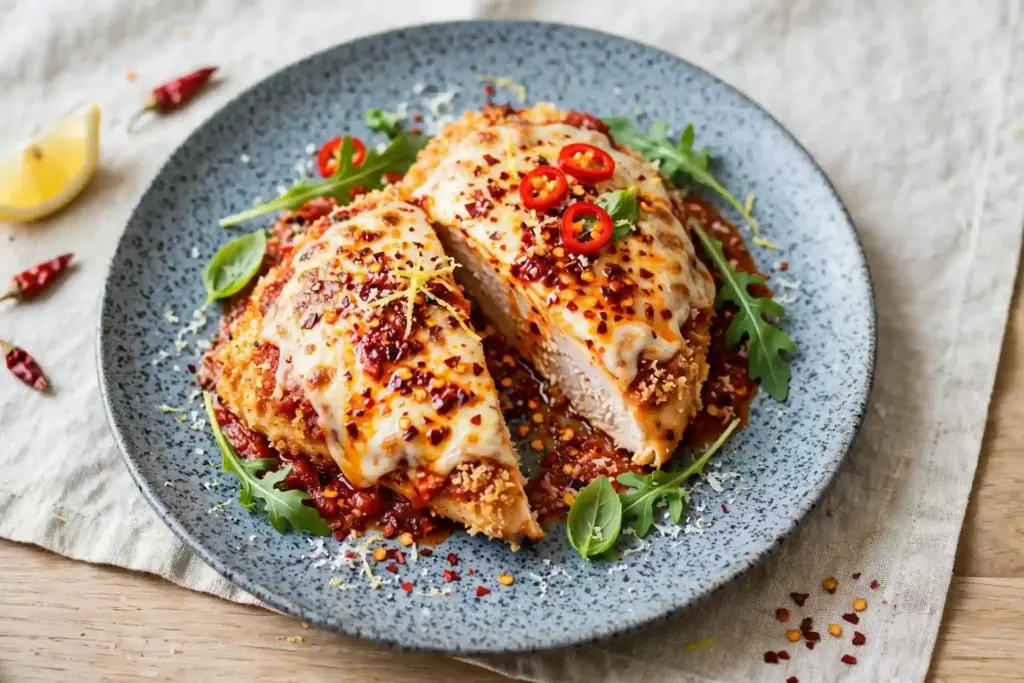
Spicy version: stir ½ teaspoon crushed red pepper flakes into the marinara before topping the chicken, or finish with a drizzle of chili oil after baking for sharper heat that doesn’t cook off.
Mild, kid-friendly version: thin the marinara with two tablespoons of chicken broth and a small spoon of butter, which softens the tomato’s acidity into something closer to a mellow, slightly sweet sauce.
Vegetarian version: swap the chicken for ½-inch slices of eggplant, salted for twenty minutes and patted dry to pull out excess moisture, then breaded and cooked the exact same way.
Gluten-free version: use a 1:1 gluten-free flour blend in place of the all-purpose flour, and swap the panko for a gluten-free panko-style crumb. The texture comes out slightly less shattery but still holds a real crunch.
Other swap: boneless, skinless chicken thighs pounded to the same ½ inch work in place of breasts for anyone who prefers darker, slightly richer meat.
Serving Suggestions
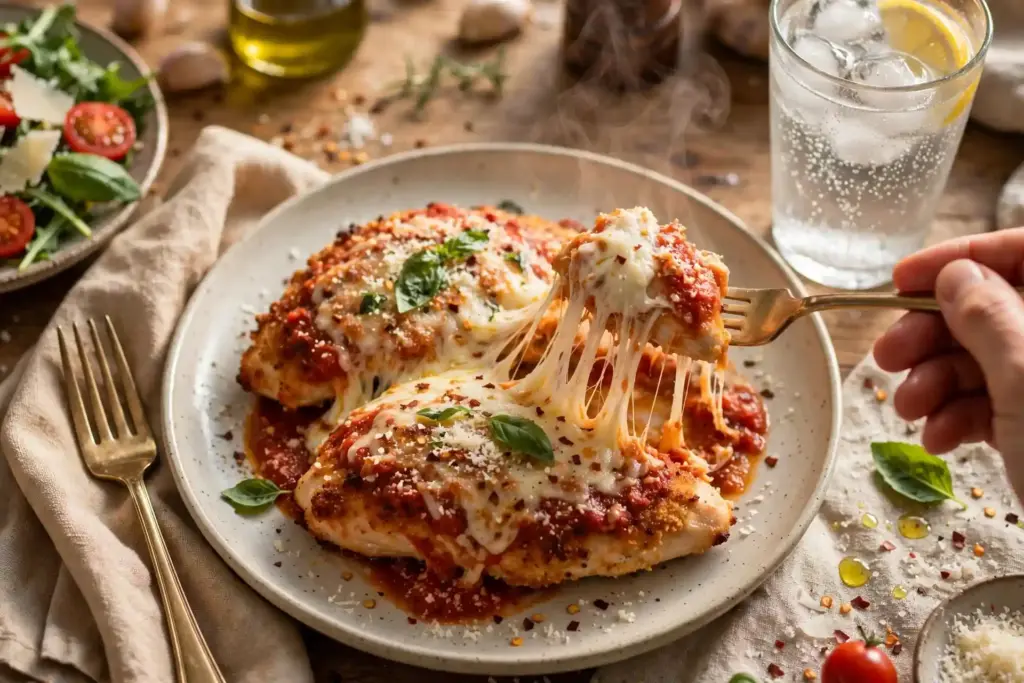
This holds up well next to a simple buttered pasta, since the plain noodles soak up any extra marinara without competing with the chicken. A side of garlic bread covers anyone who wants to mop up the sauce directly. For something lighter alongside it, a green salad with a sharp lemon vinaigrette cuts through the richness of the cheese. Roasted broccolini or steamed green beans round the plate out if you want a vegetable that doesn’t need much attention while the chicken is in the oven. To drink, sparkling water with a wedge of lemon keeps things simple and lets the tomato and cheese stay the focus of the meal.
Read Also: tater tot casserole
Frequently Asked Questions
Can I make chicken parmesan ahead of time?
Yes. Bread the cutlets up to a day in advance and keep them uncovered on a wire rack in the fridge, which actually helps the coating set before it hits the hot oil. You can also fully cook the dish, refrigerate it, and reheat it in a 350°F oven for 15 to 20 minutes the next day. I do this most Sundays when I know Monday will be busy.
Why did my breading fall off the chicken?
Almost always it’s moisture. Wet chicken meets flour and forms a paste instead of a proper coating, so pat the meat completely dry with paper towels before you start dredging. Pressing the panko onto the surface with your fingers, rather than just dipping the chicken and moving on, also makes a real difference in how well it holds.
Can I use chicken thighs instead of chicken breasts?
Yes, boneless, skinless thighs work well here. Pound them to the same ½ inch thickness so they cook evenly, and expect a slightly shorter sear time since thighs are thinner and a bit more forgiving if you leave them a minute longer than planned.
How do I know when the chicken is actually done?
An instant-read thermometer inserted into the thickest part of the cutlet should read 165°F. Visually, the crust will look deep golden and the cheese fully melted with light browning at the edges, but the thermometer is the only reading that removes the guesswork.
Why is the bottom of my chicken parmesan always soggy?
This is almost always too much sauce sitting directly on the crust before baking. A thick pool of marinara traps steam against the breading, and steam is what softens a crust that was crisp going into the oven. Spread the sauce in a thin layer instead, and keep extra sauce on the side rather than under the chicken.
Conclusion
The searing step is the one thing worth not skipping in this chicken parmesan recipe. Skip it and you’re baking raw breaded chicken under sauce, hoping the crust survives; do it and you’re just finishing an already-cooked, already-crisp cutlet in the oven. That one change is what took this from a dish that fell apart on the plate to one I make on a regular Tuesday without thinking twice about it. Pin this one if you want it saved for the next time chicken breasts are on sale, because the method works exactly the same whether you’re feeding two people or doubling it for six.
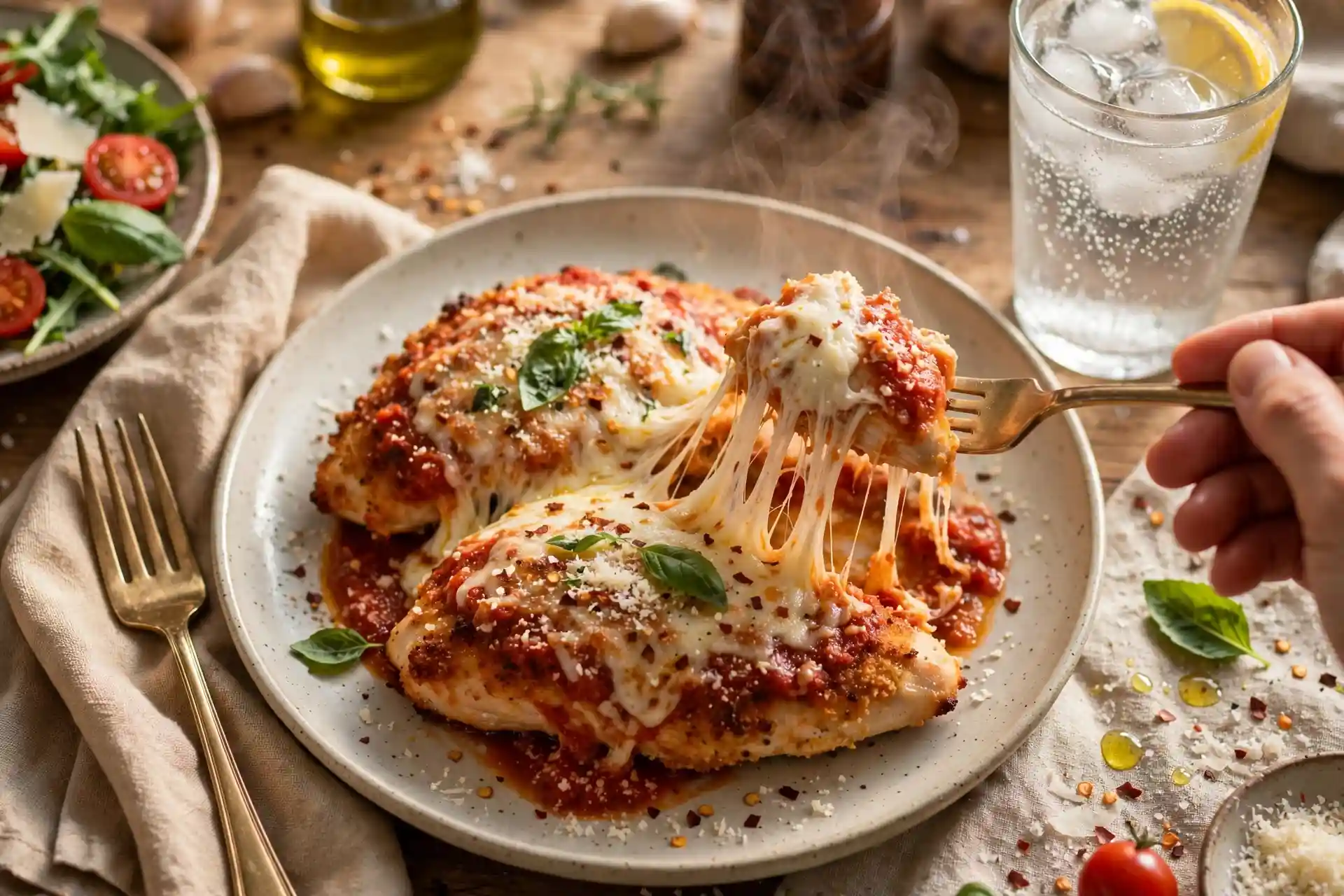
Crispy Baked Chicken Parmesan
Ingredients
Method
- Pound chicken to ½ inch thickness and season with salt and pepper.
- Dredge in flour, then egg wash, then panko mixed with ½ cup parmesan, garlic powder, and oregano.
- Sear in olive oil over medium-high heat, about 3 minutes per side, until deep golden.
- Top each cutlet with marinara, mozzarella, and the remaining parmesan.
- Bake at 425°F for 12 to 15 minutes, until internal temperature reaches 165°F.
- Rest 5 minutes, top with basil, and serve.

4 Comments
Comments are closed.